
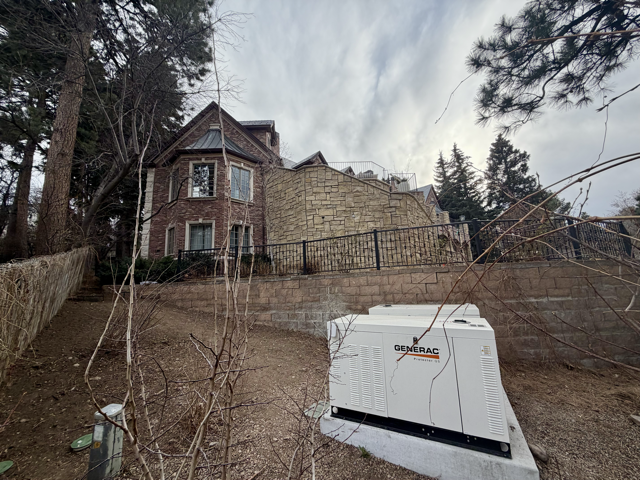
If you live in Colorado, you know spring does not always ease in quietly.
One week feels warm and calm. The next brings hard wind, blowing branches, sudden weather swings, and the kind of day where people start checking outage maps just in case. That is especially true in the foothills and along the west side of the Denver metro, where changing weather can turn into power problems pretty quickly.
That is a big reason more homeowners are thinking about backup generators before storm season really gets rolling.
At Firefly Electrical Services, we have seen more homeowners ask the same practical question: if the power goes out, what do we actually want the house to keep doing?
It is a fair question. For some families, the answer is simple. Keep the refrigerator on. Keep a few lights working. Keep the garage door operating. Keep phones charged and the internet up if possible. For others, it is more about peace of mind. They do not want to sit through another outage wondering how long it will last or whether the basics of the house will keep running.
That is why generator conversations are happening earlier now. At Firefly, generator installation and repair has become a more important conversation for homeowners who want a plan in place before spring and summer weather pick up.
Colorado Homeowners Are Thinking Beyond Snowstorm Outages
A lot of people still think of outages as a winter problem.
But in Colorado, wind can be just as disruptive. In the foothills and nearby parts of the Front Range, strong wind events can create real concerns for power reliability. And now there is another reason homeowners are paying closer attention.
Xcel Energy has made it clear that in high wildfire-risk conditions, it may use public safety power shutoffs and enhanced powerline safety settings in targeted areas to reduce the chance of powerline-related fires. That means some outages are not only caused by damage or equipment problems. In certain conditions, power may be intentionally shut off for safety.
That changes the conversation a bit.
For some homeowners, the question is no longer whether outages happen. It is whether the house is ready when they do, especially in wind-heavy areas where shutoffs can happen with limited notice. When that happens, people are not only dealing with lights and appliances going down. It can affect work-from-home setups, internet access, and day-to-day routines in a way that is hard to ignore.
That is a big part of why generators have started to feel less optional for some households and a lot more practical.
A Short Outage Can Be More Disruptive Than It Sounds
Most homeowners are not trying to prepare for the end of the world. They are trying to avoid a frustrating, expensive, or stressful afternoon.
A short outage can still create plenty of headaches. Refrigerators and freezers start warming up. Garage doors stop working. Internet drops. Security systems shift to backup mode. Charging stops. If the weather is rough, even getting updates can become a hassle.
This is one reason generator planning has become a lot more common. Even if outages are not constant, homeowners are realizing that a little preparation goes a long way.
More People Are Working, Living, and Depending on Power at Home
One of the biggest reasons backup power matters more now is simple: home life has changed.
A lot of households are doing much more from home than they were a few years ago. For some people, that means remote work and video calls that cannot just pause in the middle of the day. For others, it means kids home after school, internet-connected devices throughout the house, garage access, home security, and the normal day-to-day routines that depend on electricity more than people realize.
When the power goes out, it is not only inconvenient. It can interrupt work, delay projects, lead to missed deadlines, frustrate coworkers, and create a poor experience for customers if someone runs their own business from home. Even a short outage can throw off the rhythm of the day more than people expect.
That is a big reason more homeowners are looking at generators less like an extra and more like a practical way to keep life moving when the grid goes down.
Foothills Homes Often Have More to Lose During an Outage
In the foothills, backup power tends to feel even more practical.
Some homes have longer utility runs, more exposure to wind, heavier tree cover, and a little more distance from denser suburban infrastructure. Some also have well equipment, larger properties, detached garages, gates, or other systems that make power interruptions more than just a minor inconvenience.
In areas like Evergreen and Morrison, homeowners are often thinking about reliability a little differently because the property itself can make outages more disruptive.
When you stack that together, it makes sense that homeowners in these areas often start the generator conversation sooner.
It is not always about whole-home backup, either. Sometimes the goal is more targeted. Homeowners may want to keep key circuits running, cover the essentials, and avoid the scramble that comes with losing power unexpectedly. The right setup depends on the home, the panel, the existing electrical system, and what matters most to the household.
Many Homes Are More Power-Dependent Than They Were a Few Years Ago
This is a big part of the shift that we are seeing when visiting customer homes in 2026.
Homes today do more. Between remote work, smart home devices, larger kitchens, finished basements, electric vehicle charging, home gyms, and more electronics in general, losing power hits differently than it used to.
Even households that once could just wait it out now depend on electricity for more of daily life.
That has changed the way people think about preparedness. A backup generator is not only for rural properties or luxury homes. More often, it is becoming a practical upgrade for homeowners who want a little more control when weather gets unpredictable.
Storm Preparation Feels Better When It Happens Before There Is a Problem
The best time to think about backup power is before you need it.
That may sound obvious, but it is exactly why spring is when these calls tend to pick up. Once wind events start showing up and people are reminded how quickly conditions can change in Colorado, the conversation becomes a lot easier to have. Nobody wants to make a rushed electrical decision when a storm is already moving through and the lights are already flickering.
Planning ahead gives homeowners time to ask the right questions:
- What do we actually want backed up?
- Is our current panel ready for this?
- Do we want essential circuit coverage or broader whole-home support?
- Where would the generator make the most sense on the property?
- Are there any older electrical issues we should address first?
That kind of planning leads to better decisions and cleaner installations.
Generator Installation Is Not Just About the Generator
A lot of homeowners understandably focus on the equipment itself. But the real conversation is bigger than that.
A safe, dependable generator setup depends on the home’s overall electrical system. That includes the panel, load planning, transfer equipment, installation layout, and how the backup power is meant to function when the utility power drops.
That is why it helps to work with an electrical company that already understands the house side of the equation.
Sometimes that starts with an electrical inspection to get a clear picture of what the home can support. In other cases, it may involve electrical panel upgrades, wiring and rewiring, or other electrical repair before the generator conversation goes much further.
That is one reason Firefly’s approach tends to be more practical than pushy. Backup power works best when it fits into a smart overall electrical plan.
Some Homeowners Start with Reliability, Others Start with Comfort
There is no one reason people install a generator, and there are no wrong reasons, either.
For some, it starts with a recent power outage that caused major issues. They got through it, but they do not want to repeat the experience.
For others, it starts with the house itself. Maybe they just bought an older foothills property. Maybe they are already upgrading the electrical panel. Maybe they are making other improvements and want to think ahead while electrical work is already part of the conversation.
And for plenty of homeowners, it is simply about comfort. They want the house to feel usable and stable, even when the weather is not. It gives peace of mind to them and their families.
That is a pretty reasonable goal in Colorado based on our environment.
Backup Power Is Becoming Part of a Smarter Home Planning Mindset
One of the bigger changes we are seeing is that homeowners are starting to think more holistically.
Instead of waiting for a problem, they are looking at the house and asking what would make it safer, more resilient, and easier to live in over the next several years. Sometimes that means updating an old panel. Sometimes it means inspecting older wiring. Sometimes it means making room for future upgrades. And sometimes it means finally putting backup power on the list.
That kind of thinking is especially common in the foothills and along the west side of the metro, where homes vary a lot in age, layout, and weather exposure.
A house in a newer neighborhood may need one approach. A more exposed property with older electrical infrastructure may need another. The right recommendation depends on the home, not a canned sales script.
Why Homeowners Are Acting Before Summer Storms Ramp Up
By the time summer storms and heavier weather patterns settle in, most homeowners would rather already have a plan in place.
That does not mean everyone needs to install a generator tomorrow. It does mean this is a smart time to look at the house honestly and decide whether backup power belongs in the conversation now instead of later.
If your home has already had a few frustrating outages, if you live in a weather-exposed area, or if losing power affects more than just a couple lights and a fridge, it may be worth talking through your options.
And for homeowners keeping an eye on Xcel’s wildfire and outage-preparedness updates, that planning can feel even more worthwhile. Xcel’s pages on public safety power shutoffs and enhanced powerline safety settings make it clear that outage planning in Colorado now includes more than weather alone.
You do not need a scare tactic. You just need good information and an electrical team that understands how Colorado homes actually function.
Request a Generator Consultation with Firefly Electrical Services
If you are thinking about backup power before storm season, Firefly Electrical Services can help you look at the big picture.
We work with homeowners across the west Denver area and the foothills to make smart electrical upgrades that fit the home and the way people really live in it. Whether you are just starting to explore generator options or you already know outages have become too disruptive, we are happy to walk you through it.
Our consultations are straightforward, transparent, and centered on finding the solution that actually fits your home. We are not here to overcomplicate it or push something you do not need. We see ourselves as a local partner, and that means taking the time to consult with customers honestly, answer questions clearly, and recommend the setup that makes the most sense for the way you live.
If needed, that conversation may include backup power, panel upgrades, inspection work, rewiring, or related electrical repairs. The goal is not to force a package. It is to help you make a smart decision with clear information and a solution that fits.
Contact us to get a free quote and consultation on your backup home generator.