
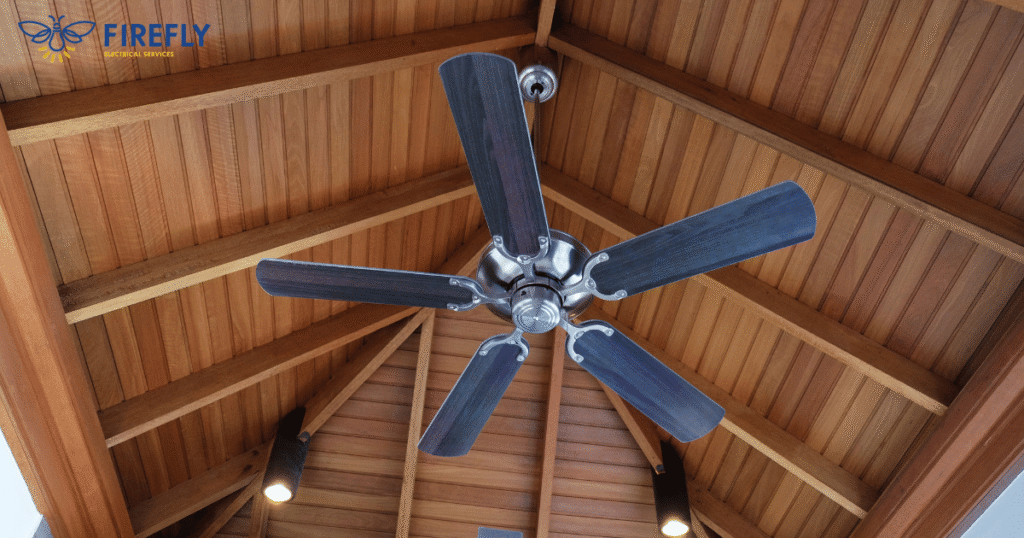
The hot days are already here, and homeowners across the Denver metro are feeling it inside their homes. When the forecast starts showing those long stretches of high temperatures and dry days, whether you are checking the weather on 9NEWS, your phone, or just stepping outside in the afternoon, it becomes pretty obvious which rooms in the house are keeping up and which ones are not.
Some homes rely on central air conditioning while others use swamp coolers, also known as evaporative coolers. Plenty of homes have a little bit of everything: older ductwork, sunny west-facing rooms, a finished basement, or an upstairs bedroom that always seems to run warmer than the rest of the house.
That is where ceiling fans can make a bigger difference than people sometimes expect!
A ceiling fan will not replace your AC or swamp cooler, and it will not lower the actual temperature of the room on its own. But it can move air in a way that makes the room feel more comfortable, which can help reduce how hard your cooling system has to work to keep everyone comfortable.
At Firefly Electrical Services, we install and replace ceiling fans for homeowners who want better airflow, more comfort, and a practical way to support their cooling system during the warmer months.
It is one of those upgrades that seems simple on the surface. But when the fan is installed correctly and placed in the right room, the difference can be noticeable every day.
Ceiling Fans Help Your Cooling System Work Smarter
A ceiling fan works by moving air across your skin, which creates a cooling effect. The room may not technically be colder, but the people in the room usually feel cooler than they would without a fan.
That matters because comfort is not only about the number on the thermostat. Airflow plays a big role too.
When air sits still, a room can feel warm, heavy, and stale. When air moves gently and consistently, that same room can feel much more comfortable, even if the thermostat is set a little higher than usual. During Colorado’s warmer afternoons, that can be a big help for homes where the AC or swamp cooler is already working hard.
The U.S. Department of Energy’s guidance on using fans for cooling explains that circulating fans create a wind-chill effect that helps people feel more comfortable, and that ceiling fans can allow homeowners to raise the thermostat setting without reducing comfort. That is the basic idea behind using fans and cooling systems together.
The fan is not doing the cooling system’s job, but It is helping the cooling system do its job better.
In a home with central air conditioning, ceiling fans can help distribute cooled air more evenly. In a home with a swamp cooler, fans can help move that cooled air through the spaces where people actually spend time the most (living rooms, bedrooms, and home offices).
Why This Matters for AC-Cooled Homes
Central air conditioning can do a good job cooling a home, but not every room gets that cool air evenly.
You may notice one bedroom gets warm in the afternoon. Maybe the upstairs feels stuffy by dinner. Perhaps the living room has high ceilings, a lot of sunlight, or an open layout that makes airflow harder to control. These are common issues in homes on the west side of the Denver metro, especially in houses with additions, finished basements, or rooms that get heavy afternoon sun.
A ceiling fan can help circulate the cooled air that is already in the room. Instead of letting cool air settle unevenly or leaving certain areas feeling stagnant, the fan keeps air moving so the space feels more balanced.
That can make it easier to avoid pushing the thermostat lower just because one room feels uncomfortable.
This is where homeowners often start to notice the practical value. If the room feels better with the fan running, you may not need to lean as heavily on the AC. Over time, that can help reduce cooling demand and make the home feel more comfortable without asking the AC to carry the full load on its own.
Why Ceiling Fans Can Help Swamp Cooler Homes Too
Swamp coolers are common in Colorado because our climate is often dry enough for evaporative cooling to work well. But like any cooling system, they need good airflow to feel effective.
The Department of Energy’s overview of how evaporative coolers work explains that these systems bring cooled outdoor air into the home and need air movement through the house to work properly. That is why airflow matters so much in homes with swamp coolers.
A swamp cooler brings cooled air into the home, but that air still needs somewhere to go. If airflow is poor, certain rooms may feel cool while others feel warm, stale, or disconnected from the rest of the house. Opening windows can help, of course, but ceiling fans can also support better air movement inside the home.
In swamp cooler homes, ceiling fans can help move cooled air farther into living areas, bedrooms, and rooms that do not get as much direct airflow from the cooler itself. They can also help keep the air from feeling uneven on warm days.
This can be especially useful in older homes, homes with additions, or homes with layouts that were not designed around modern comfort. Many houses may have changed over time, but the airflow pattern still feels a little uneven.
A fan in the right room can help the cooling system feel more connected to the way people actually use the house.
Multiple Ceiling Fans Can Help Air Feel More Balanced Throughout the Home
One ceiling fan can make a room feel better. A few well-placed fans can make the whole home feel more balanced.
This can be especially helpful in homes with lofts, upstairs bedrooms, open living rooms, finished basements, or rooms that tend to feel warmer than the rest of the house. When those spaces have better air movement, the home can feel less uneven from room to room.
That does not mean every room needs a fan, and it does not mean fans replace AC or a swamp cooler. But when ceiling fans are placed in the rooms where people actually spend time, they can help move cooled air more effectively and reduce that still, stuffy feeling that makes homeowners reach for the thermostat.
A few common places where homeowners notice the difference include:
- upstairs bedrooms that hold heat late in the day
- lofts or vaulted rooms where warm air gathers
- open living rooms with high ceilings or large windows
- finished basements that feel disconnected from the rest of the home
- home offices where comfort matters during the workday
- covered patios where still air makes warm days less comfortable
For swamp cooler homes, this can be especially useful because airflow is such a big part of how comfortable the home feels. Fans in the right rooms can help carry that cooler air farther into bedrooms, lofts, and living areas instead of letting comfort depend on one main airflow path.
The key is thoughtful placement. A fan in the right room can help. Several fans in the right rooms can work together to make the home feel more comfortable overall.
Ceiling Fans Can Reduce the Urge to Overcool the House
A lot of homeowners do the same thing when part of the house feels warm. They lower the thermostat.
That might help, but it can also make the cooling system run longer than necessary, especially if the real problem is uneven airflow rather than the overall temperature of the home. Ceiling fans can help close that comfort gap by making occupied rooms feel better without immediately asking the AC or swamp cooler for more output.
That distinction matters more than most people realize!
If a room feels warm because the air is sitting still, better air movement may solve the comfort problem. If the whole house is truly too hot, the cooling system may need attention. But in many homes, ceiling fans give homeowners a simple and affordable way to improve comfort before jumping into bigger changes.
That is why ceiling fans are such a practical summer upgrade. They do not have to be complicated to be useful and effective.
The Right Fan Placement Makes a Big Difference
Not every room needs a ceiling fan, and not every fan belongs in the same place.
The best locations are usually the rooms where people spend the most time or where comfort problems show up the most. Bedrooms, living rooms, home offices, lofts, finished basements, kitchens, and covered patios can all be good candidates, depending on the home.
Placement matters because a ceiling fan needs enough clearance, the right mounting support, and a safe electrical connection. In some rooms, replacing an existing fan is fairly straightforward. In others, adding a fan where there was only a light fixture may require new wiring, a fan-rated electrical box, or a different mounting setup.
That is where professional ceiling fan installation and replacement makes a real difference. Firefly can handle the wiring, support box installation, speed controls, light kit connections, mounting adjustments, and balancing needed for safe, quiet operation.
That behind-the-scenes work is easy to overlook, but it matters every time the fan is running overhead.
Replacing an Older Fan Can Improve Comfort and Convenience
Some ceiling fans keep spinning for years, but that does not always mean they are doing a good job.
Older fans can wobble, hum, grind, respond poorly to switches, move less air than they should, or lack the controls homeowners want now. Some were installed with the wrong electrical box. Others may have outdated lighting, poor balance, or a motor that is simply wearing out.
If a fan makes noise, shakes, flickers, or feels weak even at higher speeds, replacement may be a better option than continuing to live with it.
A newer fan may offer:
- better airflow
- quieter operation
- LED lighting
- remote or wall control
- smart controls
- a reversible motor for year-round comfort
- a cleaner look that fits the room better
And if flickering lights, strange noises, or control issues point to something beyond the fan itself, Firefly can also look at the problem as part of a broader electrical repair visit instead of guessing at the cause.
That does not mean every older fan needs to go, but it is worth asking whether the fan is actually helping the room feel better or just hanging there. A well-installed fan should feel stable, quiet, and useful.
Smart Controls Can Make Fans Easier to Use
One reason some ceiling fans do not help as much as they could is pretty simple: people forget to use them. We know that sounds crazy, but let’s discuss.
Smart controls, wall controls, remote controls, and better switch configurations can make ceiling fans easier to manage. Instead of relying on pull chains or awkward switches, homeowners can control fan speed, lighting, and schedules in a way that fits the room.
This can be especially helpful in bedrooms, high-ceiling rooms, home offices, and living areas where convenience makes a difference (who wants to get out of bed on Saturday morning to turn the fan on anyway, right?).
If you are already replacing a fan or adding one to a new room, it is also a good time to think about how the fan should be controlled every day. Firefly can help with fan wiring, dual switches, light controls, dimmers, remotes, smart fan integration, and related outlets and switches when the room needs a more useful control setup.
A fan that is easy to use is more likely to be used well, and therefore be more impactful on your comfort.
Ceiling Fans Are Also Helpful in Shoulder Seasons
Ceiling fans are usually thought of as a summer comfort upgrade, but they can be useful outside the hottest months too.
In spring and fall, Colorado weather can swing from warm afternoons to cool evenings. A ceiling fan can help move air without turning on the AC right away, especially when the house is a little warm but not uncomfortable enough to justify full cooling.
Some fans also have reversible motors that help circulate warm air during colder months. Since warm air naturally rises, a fan set correctly on low speed can help move that air more evenly through the room.
The fan is not replacing heating or cooling. It is simply helping the home feel more balanced.
For many homeowners, that year-round usefulness is what makes a ceiling fan such a practical upgrade.
Covered Patios and Outdoor Living Areas Need the Right Fan
Colorado homeowners are using covered patios, decks, and outdoor living spaces more than ever.
A ceiling fan can make those spaces more comfortable by moving air on warm days and helping reduce that still, heavy feeling under a covered area. But outdoor fans need to be chosen and installed carefully.
A fan installed outside should be rated for the location, especially if it may be exposed to moisture, wind, dust, or temperature swings. The mounting hardware, electrical box, wiring, and controls also need to match the environment.
A properly installed outdoor-rated fan can make a covered patio more enjoyable during warm months. A poorly installed or incorrectly rated fan can become a safety or reliability problem. This is especially important in areas like Evergreen, Conifer, and Morrison, where outdoor spaces can see more wind, dust, and temperature swings than a more protected interior room.
Ceiling Fans Can Fit Into Other Home Comfort Upgrades
A ceiling fan project often connects with other small electrical upgrades around the home.
Ma replacing an old fan and want better lighting in the same room. Maybe the fan is part of a bedroom update, a loft refresh, or a covered patio project. Maybe the room needs a better switch layout, a safer electrical box, or cleaner wiring before the fan can be installed the right way.
That is why fan work often overlaps with indoor lighting upgrades, fixture replacement, switch changes, and general electrical installation work. When those details are planned together, the finished room usually feels better and works better.
In older homes or rooms that have been remodeled over time, Firefly may also recommend reviewing the existing wiring before adding new fixtures or controls. Ceiling fans are not usually a major electrical load, but the wiring and support behind them still need to be safe, secure, and appropriate for the installation.
Professional Installation Is About More Than Getting the Fan to Spin
Ceiling fans seem simple until something goes wrong.
A fan that wobbles, hums, clicks, flickers, or feels loose may have an installation issue, a mounting issue, a wiring issue, or a balance problem. Since ceiling fans are heavier than most light fixtures and move while they operate, they need proper support.
That is why replacing a light fixture with a ceiling fan is not always as simple as swapping one fixture for another. The electrical box must be rated to hold the fan’s weight and movement. The wiring needs to be correct. The fan should be mounted at the right height and balanced so it runs smoothly.
If the room has older wiring, unusual switch behavior, or a fixture location that was never designed for a fan, Firefly can review whether wiring and rewiring should be part of the plan before installation moves forward.
Firefly’s licensed electricians handle those details so homeowners do not have to wonder whether the fan is safe, secure, and installed correctly.
When to Call Firefly Electrical About Ceiling Fan Installation or Replacement
It may be time to talk with Firefly if:
- you want to add a ceiling fan to a room that only has a light fixture
- your current ceiling fan wobbles, hums, clicks, or shakes
- your fan no longer moves enough air
- the light kit flickers or does not work correctly
- you want better controls, smart controls, or a remote
- you are replacing an older fan with a quieter or more efficient model
- you want to improve airflow in an AC-cooled or swamp cooler home
- you are adding a fan to a covered patio or outdoor living space
- you are not sure whether the existing electrical box is fan-rated
You do not need to have every detail figured out before calling. Sometimes the first step is simply looking at the room, the existing wiring, the ceiling structure, and how you want the space to feel.
Make Your Cooling System Feel More Effective This Summer
Ceiling fans are not a magic fix for every cooling issue, but they can be one of the most practical comfort upgrades a homeowner can make.
For AC-cooled homes, they can help circulate cool air and reduce the urge to overcool the house. For swamp cooler homes, they can help move cooled air through the rooms where people actually spend time. In both cases, the right fan in the right place can make the home feel more comfortable while helping reduce demand on the cooling system.
At Firefly Electrical Services, we install and replace ceiling fans with the wiring, support, controls, and attention to detail needed for safe, reliable operation. We help homeowners across Denver communities choose fan setups that fit the way their homes actually cool.
If your home has rooms that feel warm, stuffy, or unevenly cooled, a ceiling fan may be a smart place to start.
Schedule Ceiling Fan Installation or Replacement Today
FAQs: Ceiling Fan Installation and Home Cooling Efficiency
Do ceiling fans help lower energy bills?
Ceiling fans can help reduce cooling demand by making occupied rooms feel more comfortable. They do not lower the room temperature on their own, but they can help homeowners rely less heavily on AC or swamp coolers when used correctly.
Do ceiling fans help with swamp coolers?
Yes. Ceiling fans can help move cooled air through the home, which can make a swamp cooler feel more effective in rooms that do not get strong airflow on their own.
Should I run ceiling fans when nobody is in the room?
Usually, no. Ceiling fans cool people by moving air, not by lowering the room temperature. Turning fans off in empty rooms helps avoid wasting electricity.
Can I replace a light fixture with a ceiling fan?
Yes, but only if the electrical box is rated to support a ceiling fan. If it is not, Firefly can install the proper fan-rated box and support hardware.
What rooms benefit most from ceiling fans?
Bedrooms, living rooms, home offices, lofts, kitchens, finished basements, and covered patios can all benefit from ceiling fans when airflow or comfort is a concern.
Does Firefly install smart ceiling fans?
Yes. Firefly installs traditional and smart ceiling fans, including fans with remote controls, wall controls, light kits, and smart home integrations.
Does Firefly install ceiling fans in Lakewood and nearby foothills communities?
Yes. Firefly Electrical Services installs and replaces ceiling fans for homeowners in Lakewood, Golden, Evergreen, Conifer, Morrison, and nearby west Denver communities.